

A blurring lip tint is a lightweight lip color designed to create a soft, diffused finish. Instead of making every lip edge and line look sharply defined, it spreads color in a way that makes visible texture appear less pronounced and gives the lips a soft-focus effect.
Some blurring tints begin with a watery or glossy feel and settle into a velvet-matte finish. Others start creamy and stay softly matte. What defines the category is not one exact texture, but the finished look: smooth-looking color, softened edges, and an airy effect that feels less rigid than many traditional matte liquid lipsticks.
Blurring does not mean erasing natural lip lines. It is a visual makeup effect, not a permanent change to lip texture.
Quick Answer: What Does a Blurring Lip Tint Do?
A blurring lip tint combines color with a diffused, soft-matte effect. It can:
- Soften the appearance of visible lip lines
- Create a velvet or soft-focus finish
- Make the lip edges look gently diffused instead of sharply outlined
- Feel lighter than many full-coverage matte lipsticks
- Work as one thin layer or build into stronger color
- Create full-lip, blurred-edge, or gradient lip looks
The exact result depends on the formula, shade, number of layers, natural lip tone, and condition of the lips.
What Does "Blurring" Mean in Lip Makeup?
In makeup, blur describes the way a finish changes the appearance of light, color, and surface texture.
A highly reflective gloss draws attention to shine and dimension. A traditional flat matte can make the color look crisp and opaque, but it may also make dry areas or texture more noticeable. A blurring finish sits between those visual extremes. It reduces harsh contrast and gives color a softer, more even-looking surface.
On the lips, this usually means:
- The border can look softly feathered rather than sharply lined
- Fine lip lines may appear less prominent from a normal viewing distance
- Color looks velvety and diffused instead of heavy or chalky
- The lips still retain their natural shape and texture
Think of it as soft lighting for lip color, not a filter that removes every line.
How Is a Blurring Lip Tint Different From Other Lip Products?
Lip product names overlap, so the words on the package do not tell you everything. Finish, texture, color payoff, and application method are more useful than the category name alone.
| Lip Product | Typical Texture | Typical Finish | Color Effect | Best For |
|---|---|---|---|---|
| Blurring lip tint | Watery, airy, or lightweight cream | Soft-focus velvet or blurred matte | Diffused and buildable | Soft matte lips, blurred edges, gradient looks |
| Watery lip tint | Thin and fluid | Natural, fresh, or lightly dewy | Often sheer to medium | Casual color and lightweight everyday wear |
| Matte liquid lipstick | Creamy liquid that sets | More opaque and defined matte | Usually medium to full | Crisp edges and a bold, structured lip |
| Lip gloss | Gel, oil, or glossy liquid | High shine | Sheer to full, depending on formula | Reflective shine and a visibly glossy surface |
These are general patterns rather than strict rules. A lip tint can be highly pigmented. A matte lipstick can feel comfortable. A blurring tint can start glossy before becoming soft matte.
For a broader comparison of closely related categories, read Lip Stain vs Lip Tint: What's the Difference?
How Does a Blurring Lip Tint Create a Soft-Focus Look?
A blurring lip tint usually works through a combination of a thin spreading texture, soft-focus materials, and a flexible layer that settles over the lips.
The process often looks like this:
- The color spreads easily. A watery or lightweight texture helps distribute pigment without immediately creating a thick, rigid layer.
- The finish begins to settle. As the fresh surface changes, the color becomes softer and less reflective.
- The final layer looks diffused. The result is a velvet-matte surface that can make visible lip texture look less prominent without hiding the lips themselves.
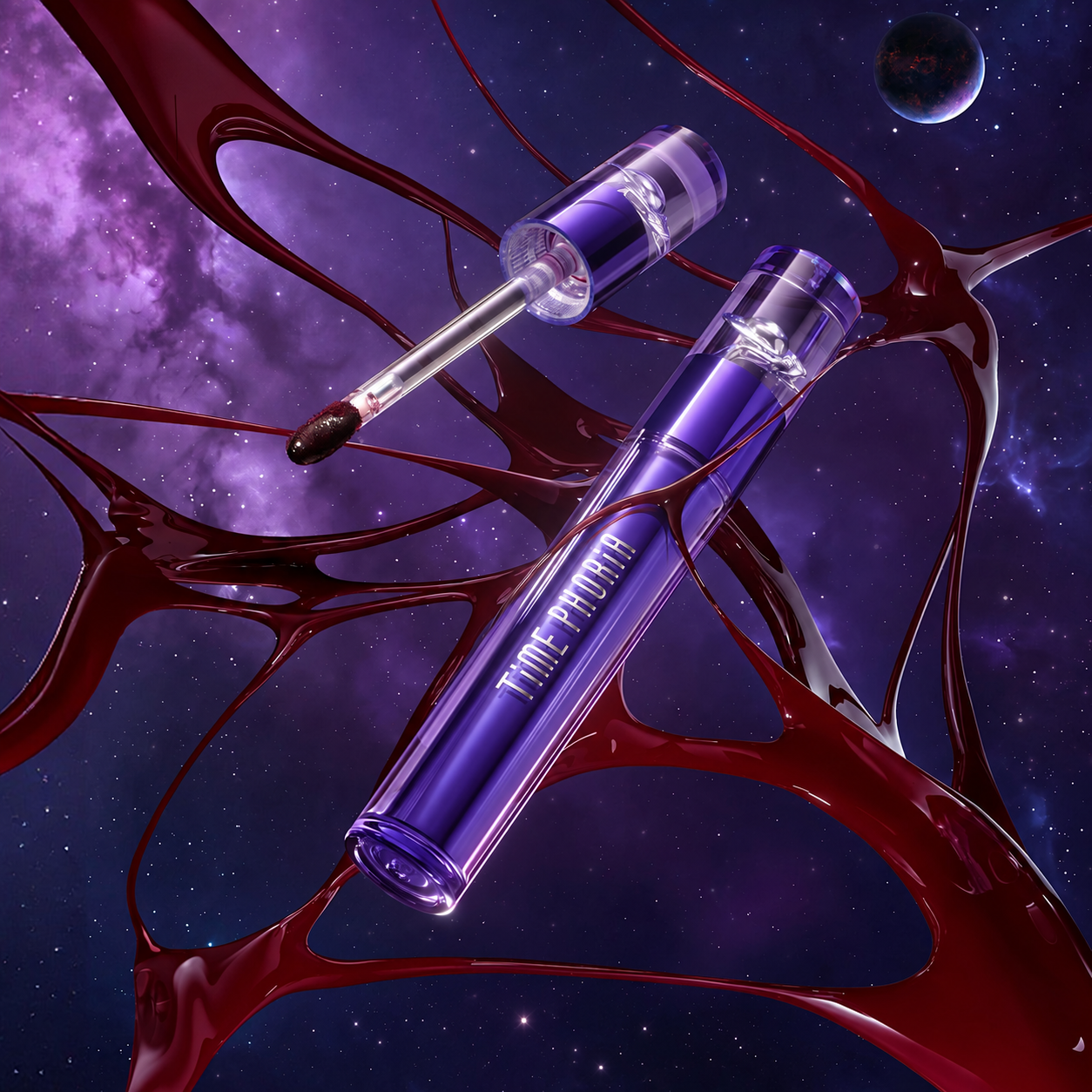
Altera Blurring Lip Tint follows this gloss-to-soft-matte approach. It applies with a fresh watery shine and develops into an airy velvet finish. Time Phoria describes its soft-focus system as Pure Blur Technology and its lightweight base as an Elastomer Water Blend.
The ingredient list includes water, dimethicone, a dimethicone crosspolymer, glycerin, glycols, and other texture-forming ingredients. Together, the formula is designed to spread smoothly, feel flexible, and create the final blurred appearance. The exact colorants vary by shade.
What Should a Soft-Focus Lip Look Actually Look Like?
A good soft-focus lip should still look like real lips.
You should expect:
- Even-looking color without a thick painted surface
- A soft velvet finish rather than a powdery, cracked appearance
- Less emphasis on fine lines, especially at a normal viewing distance
- Edges that can be defined or gently diffused depending on application
- Natural lip texture remaining visible at close range
You should not expect every line to disappear. Claims such as "poreless lips," "zero creases," or a perfectly filtered surface are not realistic descriptions of how makeup looks on every person.
The goal is a softer visual effect, not an artificial texture-free result.
Is Blurring Lip Tint Always Matte?
Most blurring lip tints finish somewhere in the soft-matte or velvet-matte family because reducing surface shine helps create the diffused look. However, they do not all begin matte.
Altera is a useful example. It feels watery and looks glossy during application, then settles into a soft, blurred finish. That transformation gives you time to spread the color before the final texture develops.
The shine you see during application is therefore not necessarily the finished result. Let the formula settle before judging the final color or adding another layer.
Is a Blurring Lip Tint the Same as a Regular Lip Tint?
Not always.
A regular lip tint is often chosen for lightweight color and a natural stained effect. It may remain watery, look dewy, or dry down with very little visible texture. A blurring lip tint places more emphasis on the final surface: a diffused, velvet effect that softens the appearance of lip lines and edges.
The categories can overlap. Both may feel lightweight, provide buildable color, and leave some color behind after the surface finish fades. The main difference is what the formula is designed to look like after it settles.
Choose a regular watery tint when you want a fresh, translucent stain. Choose a blurring tint when you want the color to look softer, more velvety, and visually diffused.
Is a Blurring Lip Tint the Same as Matte Lipstick?
Both can produce a matte result, but the visual style is different.
Traditional matte lipstick often emphasizes:
- Full, opaque color
- A clearly defined lip shape
- Precise edges
- A more structured makeup look
Blurring lip tint usually emphasizes:
- A thinner, lighter-feeling layer
- Soft or adjustable edges
- Diffused color
- A gradient or softly blended effect
If you like the polish of matte color but do not want the lips to look heavily outlined, a blurring tint can be the easier choice.
Who Is a Blurring Lip Tint Best For?
A blurring lip tint may suit you if you want:
- A soft-matte finish without a heavy lipstick look
- Lip color that feels airy and lightweight
- A blurred or gradient lip style
- Less visual emphasis on fine lip lines
- Buildable color that can move from casual to more defined
- An alternative to both high-shine gloss and flat matte lipstick
It may be less suitable when your main goal is mirror-like shine, an ultra-crisp lip line, or a completely opaque result in one heavy coat. Those looks are usually easier to achieve with gloss, lip liner, or a traditional full-coverage lipstick.
Can You Use Blurring Lip Tint on Dry Lips?
You can, but lip preparation still matters.
A lightweight, comfortable formula may feel more flexible than a very dry matte lipstick. It cannot remove existing flakes, however. If the lips are visibly peeling, any pigment can collect around uneven areas and make the result look patchy.
Before applying:
- Remove loose flakes gently. Do not scrub sore or irritated lips.
- Apply a light layer of lip balm if needed.
- Allow the balm to absorb, then blot away excess oil.
- Apply the tint in a thin, even layer.
Too much balm can make a tint slide or settle unevenly. The aim is a smooth, comfortable surface, not a thick oily coating.
How to Apply Blurring Lip Tint
For a simple full-lip look:
- Begin with clean, smooth lips.
- Apply a thin, even layer from the center outward.
- Let the texture settle without repeatedly rubbing the lips together.
- Check the finish before adding more product.
- Add a second thin layer if you want deeper color or fuller coverage.
For a blurred edge, use a fingertip or a small lip brush to soften the outer border before the formula fully settles. For a gradient lip, concentrate color in the center and diffuse the remaining product toward the edges.
Avoid replacing two thin layers with one very heavy coat. A controlled amount is usually easier to spread and more likely to look even.
Common Blurring Lip Tint Misconceptions
"Blurring" Means It Removes Lip Lines
It does not. The finish can soften the appearance of lines, but natural lip texture remains. Results also vary with lighting, shade depth, application thickness, and lip condition.
Lip Tint Is Always Sheer
Tint describes a product category, not one fixed pigment level. Some tints are translucent, while others deliver strong color in one layer. Altera is buildable and can look softer or richer depending on how much you apply.
Matte Lip Color Must Feel Dry
Finish and feel are related, but they are not identical. A product can look velvet matte while still feeling lightweight and flexible. Formula and lip preparation matter more than the word "matte" alone.
Long-Wearing Means Nothing Will Affect It
No lip product wears identically on everyone. Oily food, drinks, moisture, rubbing, lip condition, and application thickness can all change how color fades or transfers. A long-wearing tint can still need a touch-up.
Meet Altera Blurring Lip Tint
Altera Blurring Lip Tint is Time Phoria's gloss-to-soft-matte option for a diffused lip look. Its watery application gives you time to spread the color, while the finish develops into a soft, airy velvet effect.
Key features include:
- A fresh glossy texture during application
- A soft-focus velvet-matte finish after settling
- Buildable color for one- or two-layer looks
- A lightweight, non-sticky feel
- 17 shades across pink, mauve, red, coral, nude, and deeper tones
For an easy introduction to the range, start with 001 FLUX, a brownish red; 012 HUSH, a nude pink; or 013 FLUSH, a medium pink. These three best sellers are available together in the Best-Sellers Lip Tint Trio.
Your natural lip color, skin tone, lighting, and number of layers can change how each shade appears. Use official swatches as a comparison guide rather than an exact color guarantee.
FAQs
What is a blurring lip tint?
A blurring lip tint is a lightweight lip color that creates a soft, diffused finish. It is designed to make visible lip lines and hard edges look less prominent while leaving a velvet or soft-matte color effect.
Does blurring lip tint hide lip lines?
It can soften their appearance, but it does not remove or completely hide natural lip texture. Thin application and smooth lip preparation usually produce the most even-looking result.
Is blurring lip tint glossy or matte?
It depends on the formula. Some are soft matte from the start. Altera applies with a watery glossy shine and then settles into a soft-focus velvet-matte finish.
What is the difference between blurring lip tint and regular lip tint?
Regular lip tint usually focuses on lightweight stained color. Blurring lip tint also focuses on the finished texture, creating a softer, more diffused and velvety appearance.
Is blurring lip tint good for dry lips?
It can be comfortable on dry-feeling lips when the formula is lightweight and the lips are properly prepared. Existing flakes may still show, so gently smooth the lips and avoid applying a thick layer over peeling areas.
Can I apply two layers of blurring lip tint?
Yes. Apply one thin layer, allow it to settle, and add a second thin layer for deeper color or more coverage. Two controlled layers are usually easier to keep even than one heavy coat.
Is blurring lip tint transfer-proof?
Not automatically. Transfer depends on the specific formula, setting time, layer thickness, moisture, food, and friction. Allow the tint to settle and expect to touch up after activities that disturb lip color.
How long does blurring lip tint last?
Blurring tints can be long-wearing, but there is no single wear time for every person. Meals, drinks, lip condition, rubbing, and application method all affect how the color fades.
Final Takeaway
A blurring lip tint is made for people who want lip color to look soft, lightweight, and visually diffused. It combines the easy feel of a tint with the polished effect of a velvet-matte lip, while allowing you to choose between a subtle blurred look and richer layered color.
The most important expectation is simple: soft-focus makeup can reduce the visual emphasis on texture, but it should still look like real lips.
Explore all 17 shades of Altera Blurring Lip Tint, or begin with 001 FLUX, 012 HUSH, and 013 FLUSH in the Best-Sellers Lip Tint Trio. You can also browse the full Time Phoria lip makeup collection to compare glossy, blurred, and matte finishes.