

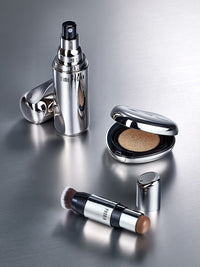
A cushion foundation is complexion makeup packaged in a compact: a sponge holds the foundation, and a separate puff picks up product for application. You press the puff into the cushion, then tap the makeup onto your skin. The compact makes controlled application and on-the-go touch-ups convenient, but “cushion” describes the delivery format, not a guaranteed coverage level, finish, or wear time. One cushion can be sheer and glowy; another can offer fuller coverage and a soft-matte look. To choose well, check those three qualities separately—and remember that shade match, skin preparation, and how much you apply can change the result.
How Does a Cushion Foundation Work?
Open a typical cushion compact and you will find a mirror, a puff, and a compartment containing a sponge saturated with foundation. The puff transfers a small amount from the sponge to your face. That is the defining idea: the cushion is the product reservoir, while the puff controls how you place it. It is still foundation, not a different category of skin care.
Because the product is already in a compact, you do not need to pour liquid onto the back of your hand. The puff also makes it easy to add coverage to a specific area. The trade-off is that repeatedly pressing a loaded puff into the compact can put more product on your face than you intended, especially with a high-coverage formula. Begin with a light press; you can always pick up more.

Coverage, Finish, and Wear: Three Different Questions
These terms often appear together on a product page, but they describe different things.
| Question | What it means | What to check as a beginner |
|---|---|---|
| Coverage | How much the makeup visually evens skin tone or reduces the appearance of redness and marks | Does one thin layer give the level you want, or do you prefer a second light layer only in certain spots? |
| Finish | How the surface looks after application—such as dewy, satin, or soft matte | Do you want visible glow or a less shiny look? Check in natural light after the formula settles. |
| Wear | How the makeup looks and feels as hours pass | Does it separate around the nose, collect in folds, feel dry, or become shiny? Your skin and routine matter. |
A dewy cushion is not automatically low coverage, and a matte cushion is not automatically long-lasting. Likewise, a full-coverage formula does not require a thick layer everywhere. Treat “up to” wear-time statements as product positioning, not a promise that every face will look unchanged for that many hours.

Coverage: start thin, then build where needed
The first layer should be light enough to show you how the formula sits on your skin. If you want more coverage, tap a small second layer only over the areas that still need it. On a visible spot, targeted concealer can sometimes give more control than adding foundation across the whole face.
Finish: choose the look, not just the skin-type label
Soft matte means a more diffused, less reflective surface; dewy means a more luminous one. Either can be a preference rather than a rule about who is “allowed” to wear it. If you are comparing options, browse the TimePhoria foundation collection to see the listed coverage and finish for each formula. For a contrasting cushion example, Timeless Utopia Glow Perfection Cushion is positioned for a radiant, soft-blur look rather than Lumina’s soft matte.
Wear: think beyond the number on the box
Foundation may look different after you have talked, touched your face, produced oil, or spent time in heat or humidity. A well-matched formula can still need a small touch-up. Judge wear by your own day: take a photo just after application and another several hours later in similar lighting. Compare the T-zone, around the nose, and any dry patches instead of relying on one overall impression.
How to Apply Cushion Foundation for the First Time
- Prepare your skin. Start with a clean face, then use moisturizer and sunscreen as appropriate for your routine. Let skincare settle before makeup. The American Academy of Dermatology’s skin-care order places moisturizer and/or sunscreen before makeup.
- Pick up less than you think you need. Press the puff lightly into the cushion once. If one area of the puff is heavily loaded, begin where you want the most coverage, then use the remaining product toward the edges of your face.
- Tap instead of dragging. Press the puff onto the center of the face and work outward with small, overlapping taps. Use the remaining product near the hairline and jaw so those edges do not look heavy.
- Check the first layer in daylight. Look at the sides of the nose, around the mouth, and along the jaw. Add a little more only where you want extra coverage.
- Leave good areas alone. Repeated tapping after the base looks even can build texture rather than improve it.
If you use sunscreen, cushion foundation is not a substitute for that step unless the product is specifically labeled and applied as a sunscreen. The AAD recommends a broad-spectrum, water-resistant SPF 30 or higher for sun protection.
Where Timeless Lumina Fits
Timeless Lumina Matte Cover Cushion Foundation is TimePhoria’s full-coverage, natural soft-matte cushion. The product page presents it as an option for people seeking more coverage and less visible shine, particularly on oily or combination skin. That makes it a useful example of why “cushion” does not necessarily mean sheer or dewy.
If you are trying Lumina for the first time, use the same light-puff approach above even though it is designed for fuller coverage. Notice how one layer looks before adding a second. Its listed 45% water content and long-wear, color-resistance language describe the brand’s formula and intended performance; they do not guarantee that every wearer will experience identical comfort, shade stability, or wear. Check the current product page for shades and availability rather than relying on an older shade count.
Is a Cushion Right for You?
A cushion may suit you if you like a portable compact, prefer applying foundation with a puff, and want to build coverage in small areas. It may be less convenient if you prefer a brush or want to mix shades on a palette before applying. Whichever format you choose, the best test is whether the actual shade, finish, and feel fit your own routine—not whether the packaging is trendy.
Keep the puff and compact clean, close the case after use, and avoid sharing it. The FDA’s cosmetic safety guidance advises clean hands, following product directions, not sharing makeup, and keeping containers closed. Follow the puff-cleaning or replacement instructions provided with your specific compact.
Frequently Asked Questions
Is cushion foundation the same as liquid foundation?
They can contain similar types of complexion formula, but a cushion stores the product in a compact sponge and is typically applied with a puff. A bottled liquid foundation gives you different dispensing and tool options. Compare the specific formulas, not just the packaging.
Is cushion foundation always light coverage?
No. Coverage varies by formula and by how much you apply. Lumina, for example, is positioned as full coverage, while other cushions may offer a lighter or buildable look.
Does matte cushion foundation last longer than dewy cushion foundation?
Not necessarily. Finish describes how the makeup looks; wear describes how it holds up over time. Skin preparation, oil, weather, formula, and application amount can all affect wear.
Can I use a cushion for touch-ups?
Yes, but use a small amount on only the area that needs it. If the area is oily, gently blot first rather than pressing more foundation over a slick surface. If the base has separated badly, removing and redoing that small area may look cleaner than stacking layers.
The Beginner Takeaway
Think of a cushion as a foundation format with a built-in application method. Choose it by coverage, finish, shade, and how it wears on your skin—not by the word “cushion” alone. Start with one thin tapped-on layer, build locally, and check the result in natural light. If you want full coverage with a soft-matte look, Lumina is one option to compare; if you prefer more glow, compare a radiant cushion before deciding.


![Starry Horizon Beauty Bag [Free Gift]](http://timephoria.com/cdn/shop/files/715a37160db9508c03295b66565e688b.jpg?v=1787818284&width=160)